blog
Building a Passive House: Should I Build On Site, or Work with a Prefab Company?
As high-performance building standards continue to gain momentum, more project teams are asking the same question: should a passive house be built conventionally on site, or is a prefabricated approach the better path?
The reality is that both methods can produce exceptional results. Passive House is a performance standard, not a construction method. What matters is delivering a building that meets rigorous targets for energy efficiency, comfort, durability, and indoor air quality.
The challenge is how to get there.
Passive House Demands Precision
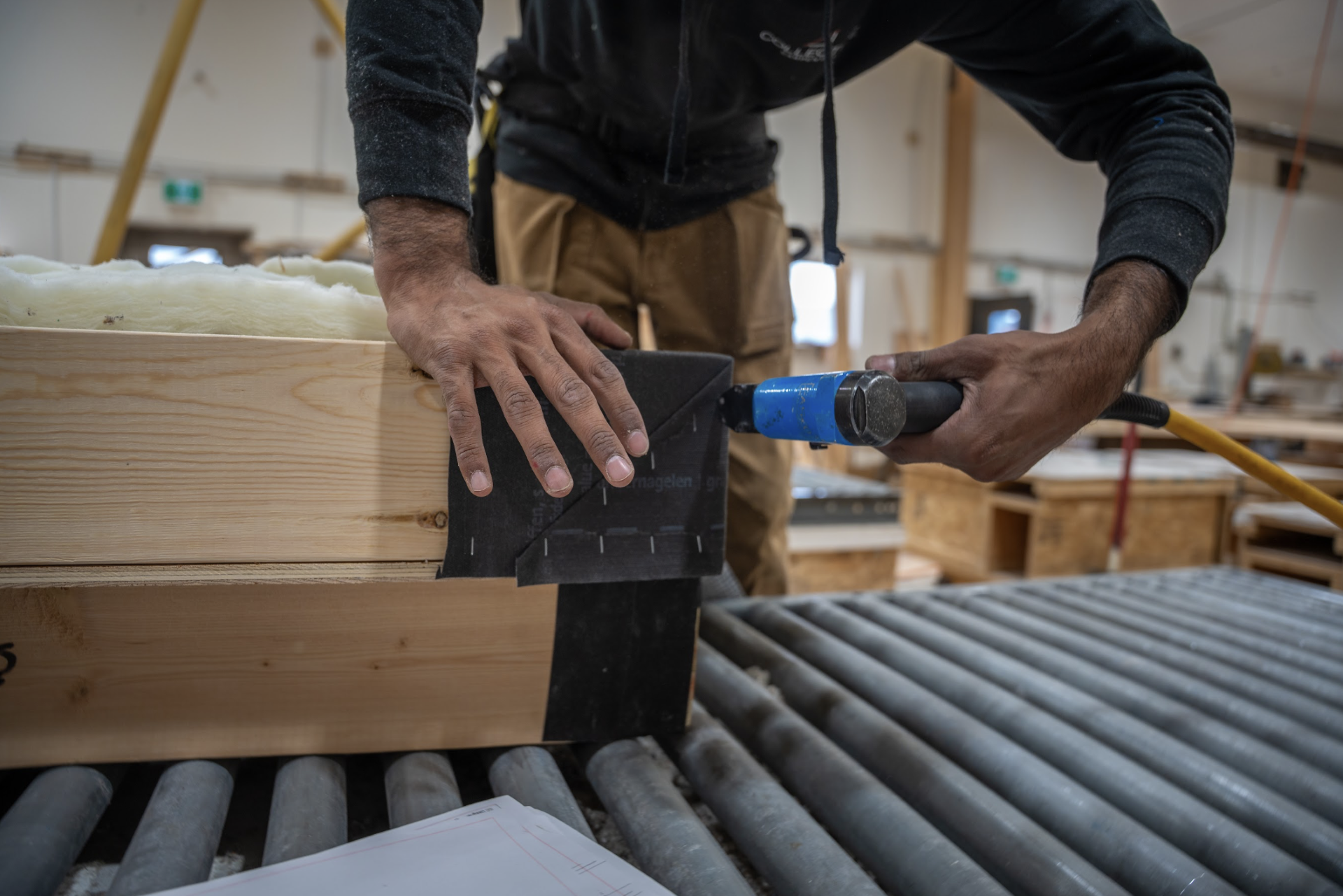
Passive house construction demands an extraordinary level of precision. Corners and intersections must be airtight. Thermal bridges need to be carefully designed and executed. Building assemblies require coordination across multiple trades, often with very little room for errors that could result in a compromised system. Even the best-designed projects are met with challenges when critical details are interpreted differently on site.
This is where prefabrication can provide a significant advantage.
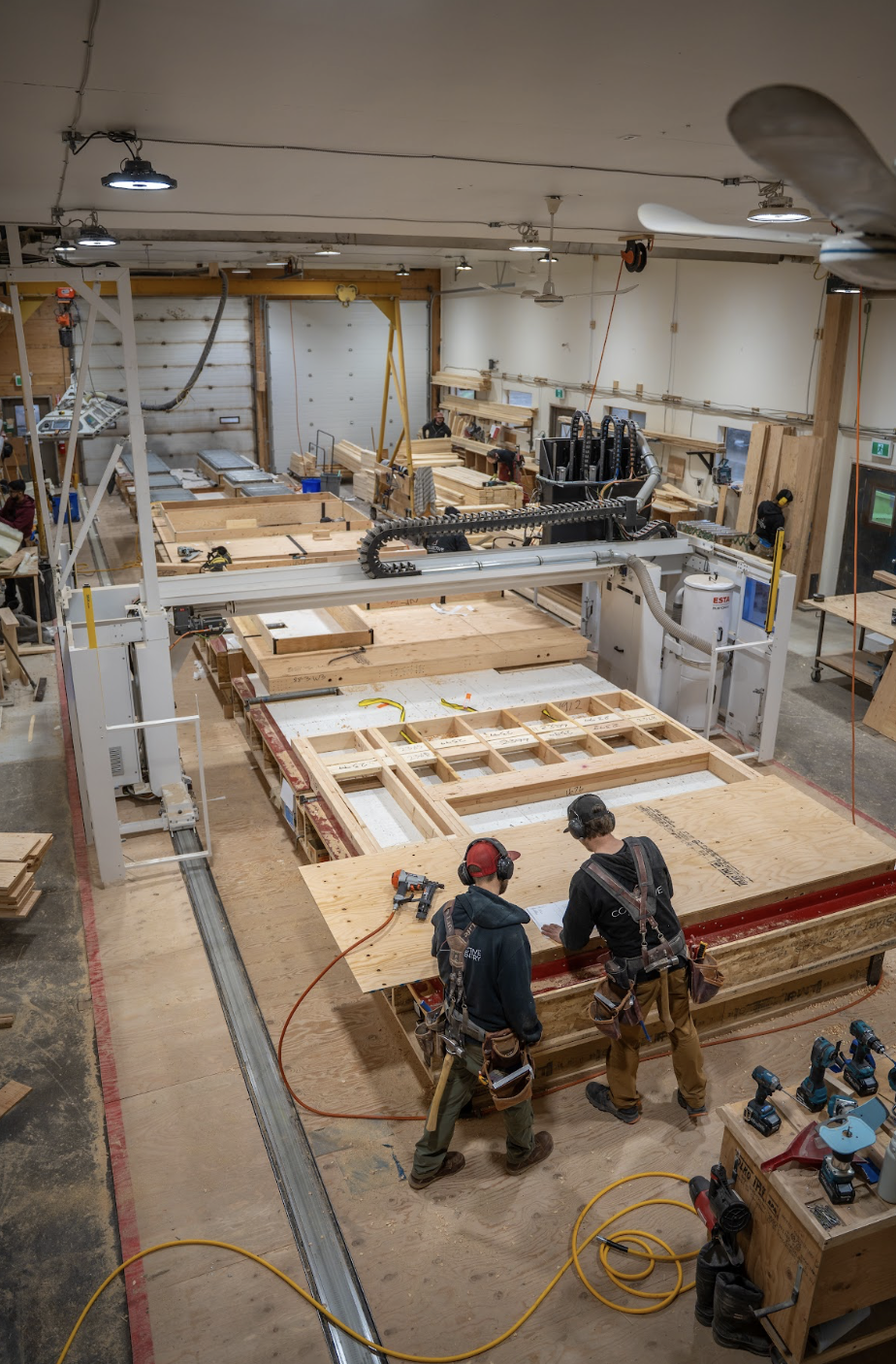
By moving a large portion of the building envelope into a controlled manufacturing environment, many of the variables that affect quality on site are reduced. Critical assemblies are built indoors under consistent conditions, eliminating weather exposure of these specialized materials.
Why More Teams Are Turning to Prefabrication
The result is not simply faster construction on installation day. It is often a more predictable construction process with a high-quality outcome.
For passive house projects, predictability matters. Building performance is directly tied to execution. Small gaps in insulation, inconsistencies in air sealing, or poorly coordinated penetrations can have outsized effects on the final outcome, and often require re-engineering or significant on site problem-solving. Prefabricated wall, roof, and floor assemblies allow these details to be repeated with a high degree of consistency, helping project teams maintain quality from one panel to the next.
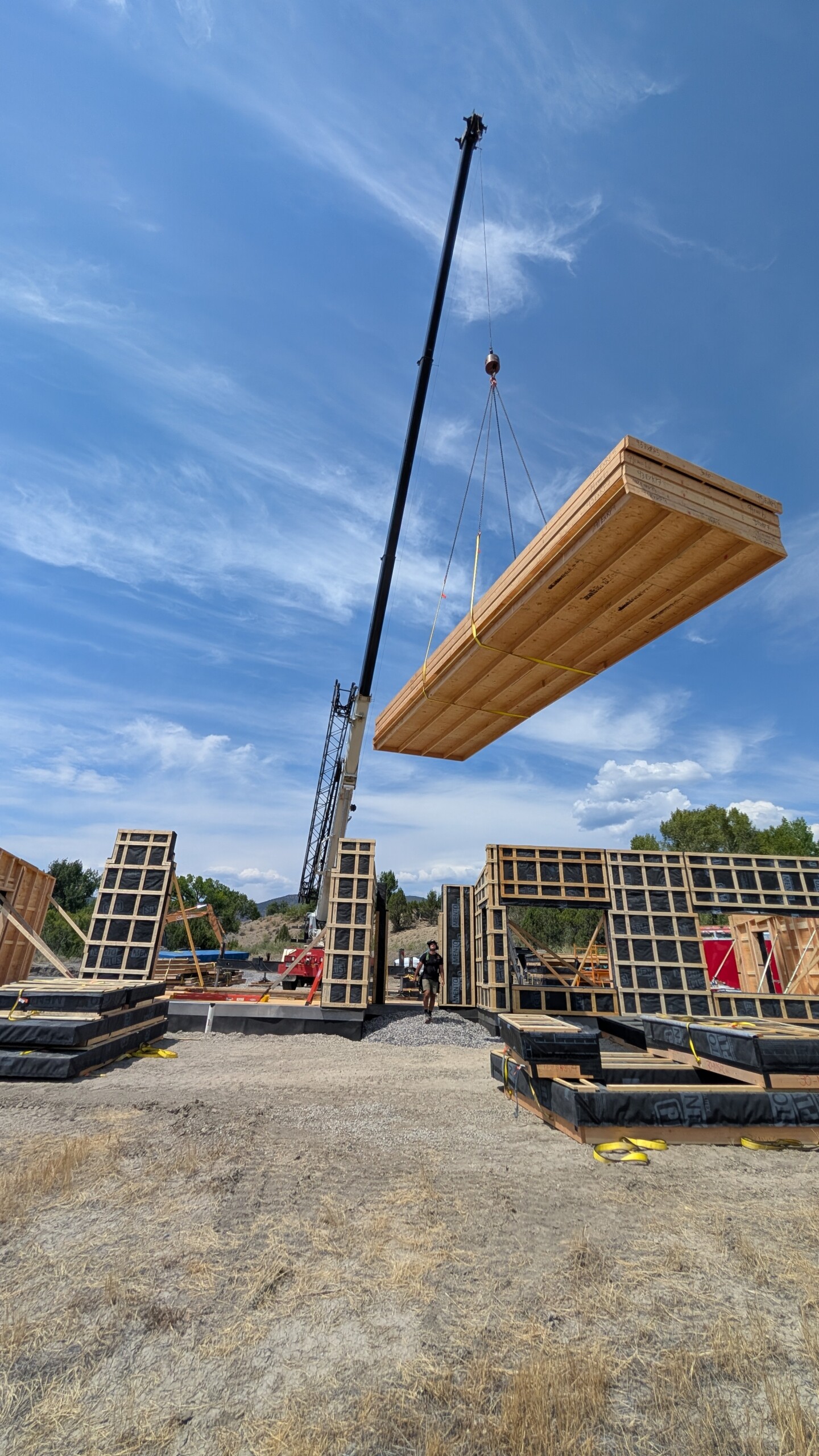
Prefabrication can also help streamline the construction schedule. While site work and foundations are underway, building components can be manufactured simultaneously. Once delivered, installation often occurs in a matter of days rather than weeks, allowing projects to become weather-tight much earlier in the process.
This can be particularly valuable in regions with short construction seasons, challenging weather conditions, or limited access to skilled labor.
Building with Greater Certainty
Of course, prefab is not a one-size-fits-all solution. Every project has unique requirements, budgets, locations, and design priorities. The greatest benefits are often realized when prefabrication is considered early in the design process, allowing the building system, structure, and details to be coordinated from the outset.
At Collective Carpentry, we see prefabrication as a tool that helps teams deliver high-performance buildings with greater certainty. It does not replace thoughtful design, skilled trades, or collaboration. Rather, it creates an environment where those efforts can be executed more efficiently and with fewer variables.
Ultimately, the decision between site-built and prefabricated construction is not about choosing one approach over another. It is about selecting the process that best supports the goals of the project.
For teams pursuing passive house, prefabrication offers a compelling opportunity: better quality control, greater schedule certainty, and a construction process designed to support the precision that high-performance buildings demand.
Learn More About Prefabricated Building Systems
Interested in how prefabricated wall, roof, and floor assemblies come together? Explore Collective Carpentry’s Building System and Designing for Prefab resources to learn more about the planning, coordination, and construction principles behind high-performance prefabricated buildings.
To see the process in action, watch the Collective Homes short film and discover how prefabrication can help deliver quality, efficiency, and performance from design through installation.